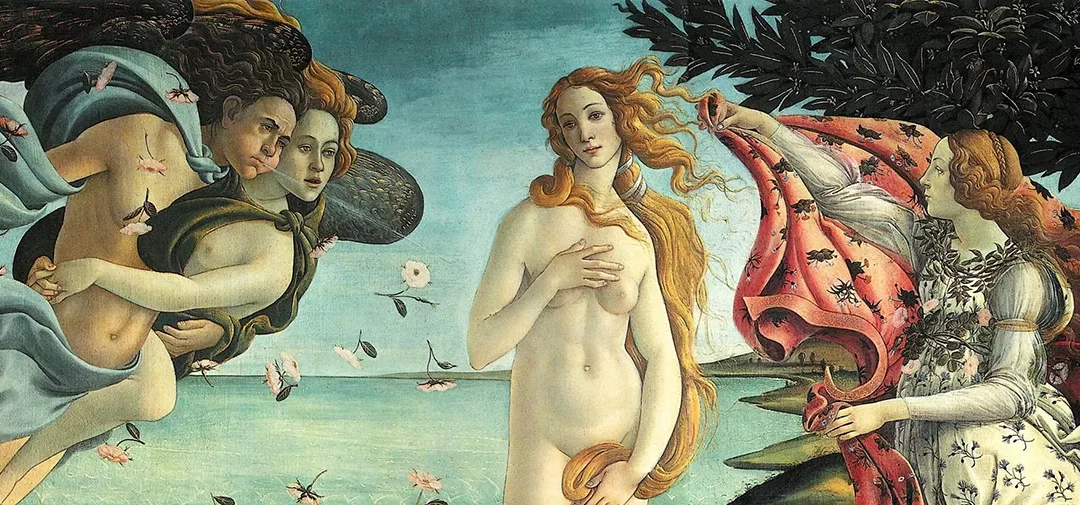
The Birth of Venus by Sandro Botticelli
The Birth of Venus, created by Sandro Botticelli between 1482 and the 1485, it is one of the most iconic works of the Italian Renaissance.
This extraordinary tempera on canvas is preserved in the Uffizi Gallery in Florence, where it continues to fascinate millions of visitors every year.
The painting represents the goddess Venus emerging from the sea waters on a shell, pushed towards the shore by the wind generated by Zephyr and Aura.
One of the Hours is waiting for her, the goddesses of the seasons, ready to cover it with a flowery mantle.
The scene is surrounded by an ethereal atmosphere, suspended between reality and myth.
One of the main characteristics of the work is its extraordinary idealized beauty.
Venus, with her slender body and perfect proportions, embodies the Neoplatonic ideal of divine beauty.
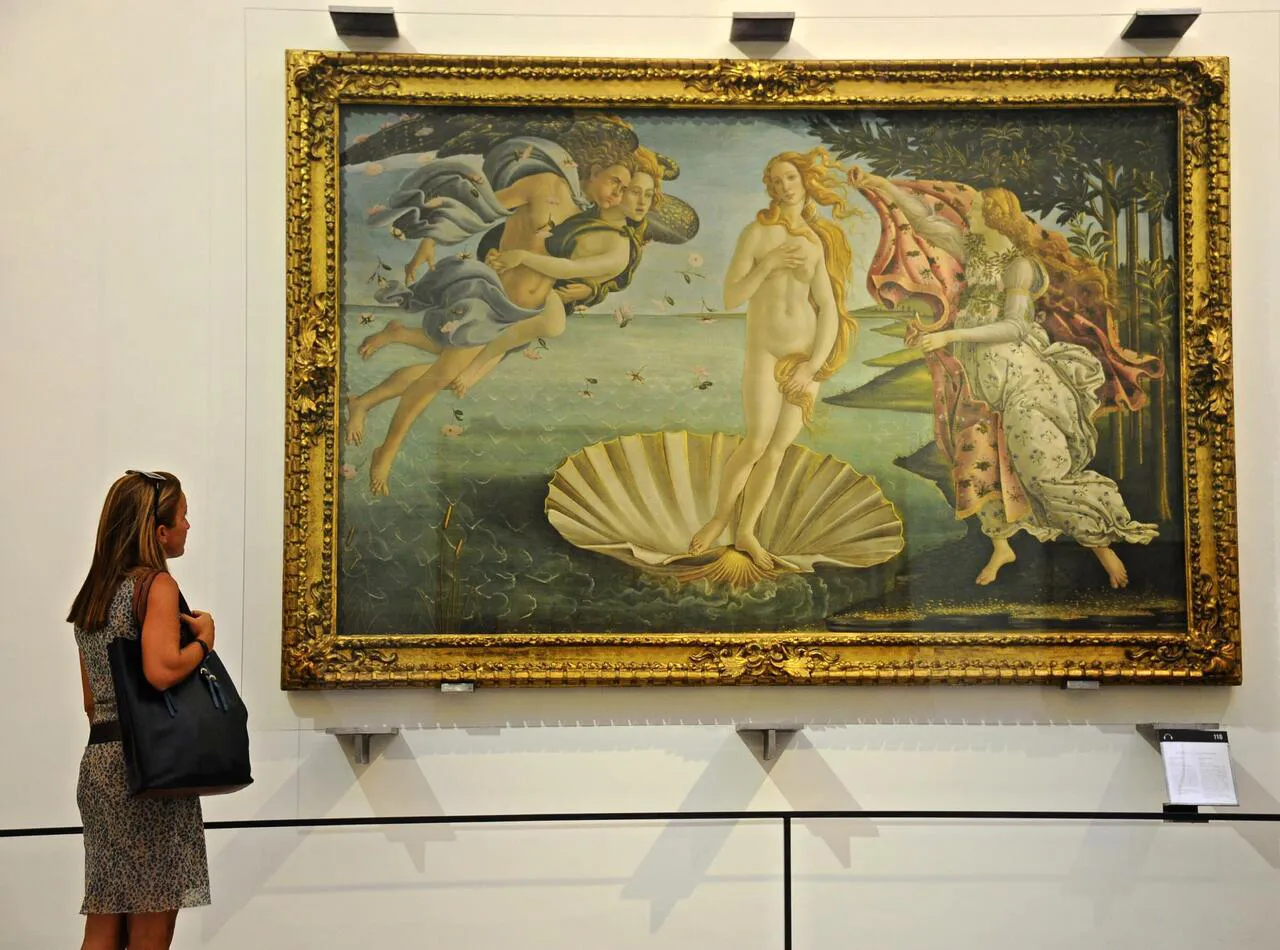
Botticelli's Venus exhibited at the Uffizi
Botticelli uses a delicate and harmonious color palette, dominated by pastel shades, which give lightness and serenity to the composition.
The details are treated with extreme attention, as can be seen in the waves of the sea and in the rich floral motifs of the mantle and lawn.
The work has a strong symbolic component.
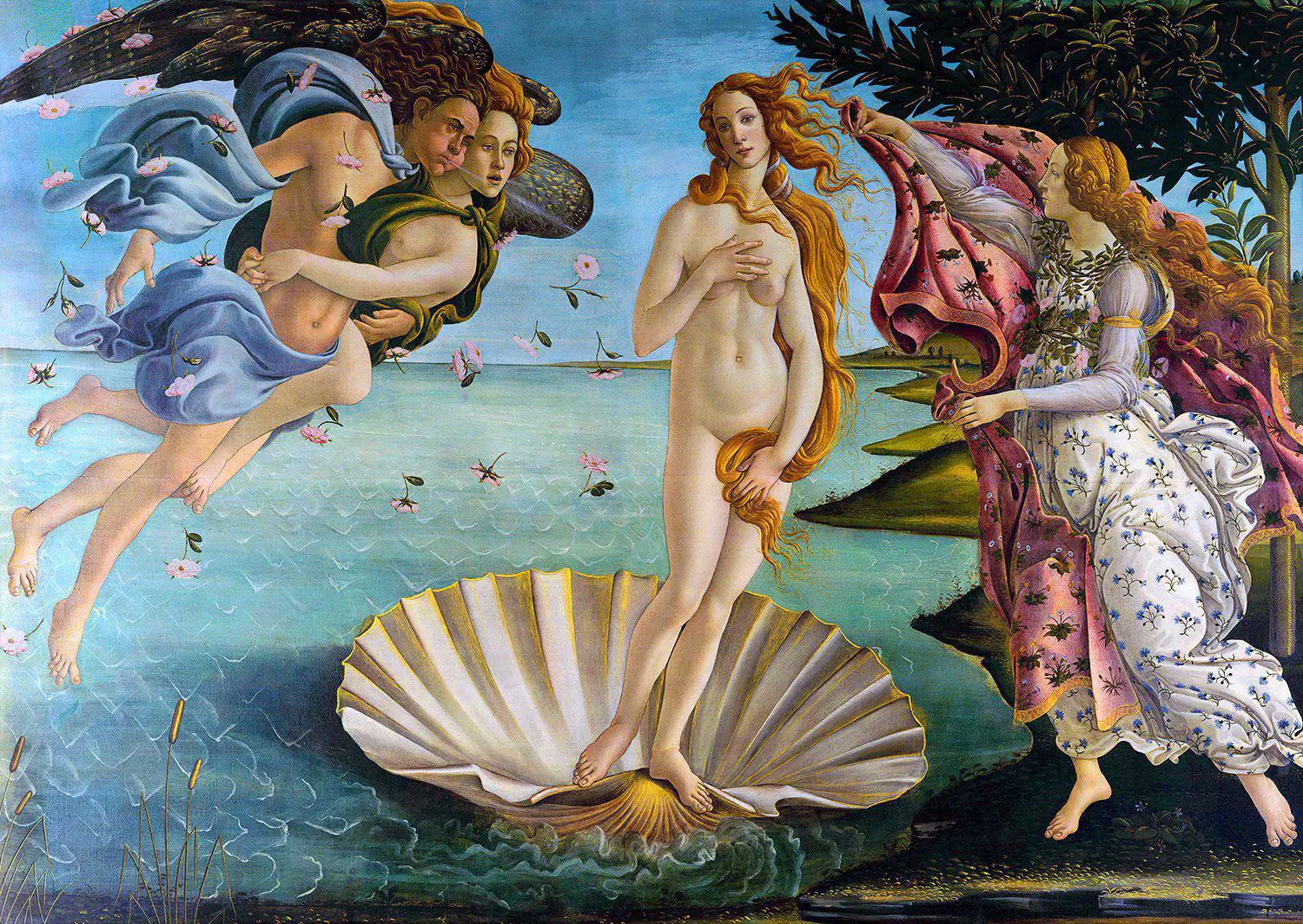
Uffizi Florence – The birth of Venus – Botticelli
Venus does not only represent the goddess of love and beauty, but it also symbolizes the spiritual and intellectual rebirth of man, a central theme of the Renaissance.
Water and flowers underline the idea of purity and fertility.
The Birth of Venus is much more than a pictorial masterpiece: it is a cultural and philosophical manifesto of the era.
Through this extraordinary work, Botticelli was able to capture the essence of Renaissance humanism, leaving an artistic legacy that continues to inspire the entire world.