The Church of Santa Croce
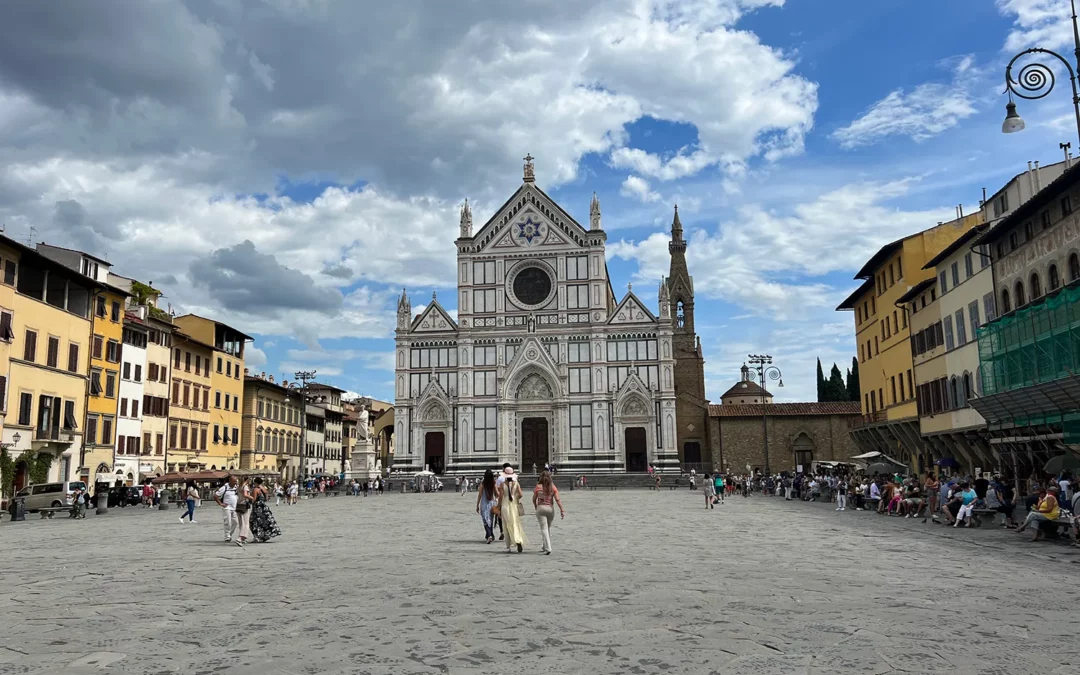
The Church of Santa Croce, located in the heart of Florence, it is one of the greatest examples of Italian Gothic.
The Church of Santa Croce was designed at the beginning of 1294 by the architect Arnolfo di Cambio and was consecrated in 1442.
Holy Cross
This majestic religious building is famous not only for its impressive architecture, but also for being the burial place of some of the most illustrious figures in Italian history.
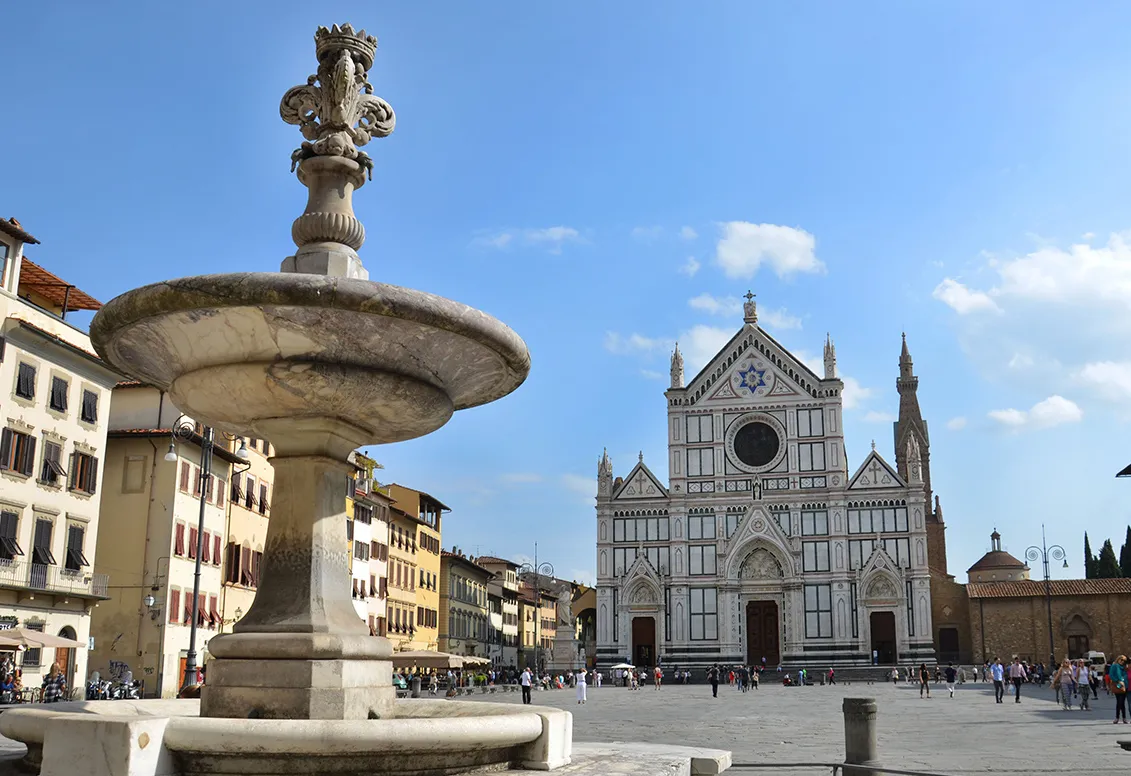
The exterior of the church stands out for its white marble facade, green and red, completed in the 19th century based on a design by Niccolò Matas.
The large central rose window and the elegant Gothic shapes give the church a solemn and harmonious appearance, which immediately attracts the attention of visitors.
The interior of the church is equally impressive. Divided into three naves, the space is illuminated by natural light that filters through the large windows.

Interior of Santa Croce
Among the most important works are Giotto's frescoes in the Bardi and Peruzzi chapels, which narrate episodes from the life of Saint Francis and Saint John the Evangelist.
These masterpieces are testimony to Giotto's influence on Italian art of the fourteenth century.
Santa Croce is also known as the “Temple of Italian Glorie” for the numerous tombs of illustrious people it hosts.
Among these, Michelangelo stands out, Galileo Galilei, Niccolò Machiavelli and Ugo Foscolo.
The church also houses the funerary monument of Dante Alighieri, a tribute to the great Florentine poet, even if his remains are not here.
Another notable work is Cimabue's Crucifix, unfortunately damaged by the flood 1966, but still revered for its beauty and historical significance.
The Church of Santa Croce represents a true living museum, where art, history and spirituality come together in a unique experience for every visitor.